Small Crowd, Big Checks: How Niche Creators Are Winning by Thinking Smaller
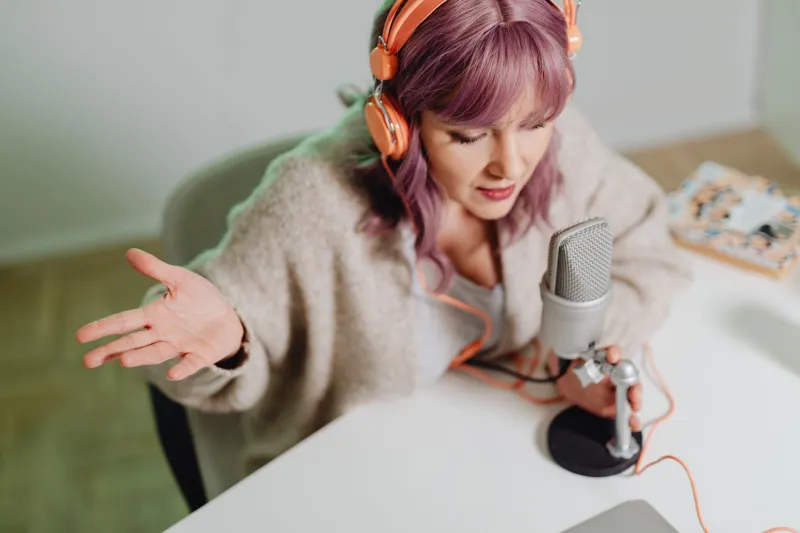
There's a certain kind of creator who never made it onto a brand's dream list. No million-subscriber milestone. No viral moment that cracked the mainstream. And yet, somehow, they're paying their mortgage, funding their passion projects, and sleeping pretty well at night.
Meet the niche creator economy — and it's quietly rewriting the rules of what it means to "make it" online.
The Myth of the Mega-Audience
For years, the influencer playbook was straightforward: grow big, attract brands, cash in. The bigger the audience, the bigger the deal. It made sense on paper. But somewhere between the algorithm shifts and the sponsored-post fatigue, something cracked in that model.
Engagement rates on mega-accounts have been cratering for years. A creator with 2 million followers might pull a 0.5% engagement rate on a post. Meanwhile, a creator with 8,000 deeply devoted followers in a hyper-specific niche — say, restoring vintage Moog synthesizers or fermenting obscure regional hot sauces — might see 15% or more. Brands that actually pay attention to performance metrics have started to notice.
"I got my first real sponsorship with 4,200 subscribers," says Marcus T., a Chicago-based YouTuber who documents the restoration of pre-1980s analog audio equipment. "The company that reached out made high-end soldering kits. They didn't care that I wasn't famous. They cared that every single person watching my videos was exactly the kind of person who buys soldering kits."
That's the core logic of the niche economy in one sentence.
Depth Over Width
The shift happening right now isn't just about follower counts — it's a philosophical one. A growing number of creators are consciously choosing depth over width. They're not trying to appeal to everyone. They're trying to be everything to someone.
Take Priya N., a food creator based in Portland who built her platform around avant-garde South Asian fusion cooking — dishes that deliberately subvert traditional techniques. She has around 22,000 Instagram followers. That's not a number that would impress most talent agencies. But her Substack newsletter brings in over $6,000 a month in paid subscriptions, she sells out her virtual cooking workshops in hours, and she recently launched a digital recipe zine that moved 1,400 copies in its first week.
"I tried the broad appeal thing for about a year," Priya says. "I made content I thought everyone would like. And everyone kind of liked it. But nobody loved it. Nobody felt like it was made for them. When I got weird and specific, everything changed."
That word — weird — comes up again and again in conversations with niche creators. It's not a liability anymore. It's the product.
The Economics Actually Work Out
Here's where the math gets interesting. Traditional influencer economics run on brand deals and ad revenue, both of which scale with audience size. Niche creator economics run on something different: community monetization.
Think paid newsletters, memberships, workshops, digital products, limited merchandise, and direct patronage through platforms like Patreon or Ko-fi. These revenue streams don't require a massive audience — they require a loyal one.
Kevin R. runs a newsletter and podcast about competitive ultralight backpacking. His audience is somewhere around 11,000 people total across platforms. He makes over $90,000 a year between his Patreon, affiliate partnerships with gear companies, and an annual digital gear guide he sells for $29. "I know people personally in my community," he says. "I've had the same Patreon supporters for three years. That's not something you get when you're chasing viral."
This kind of creator-audience relationship also creates a natural defensibility. Algorithms change. Platforms rise and fall. But a deeply loyal niche community tends to follow a creator wherever they go, because the relationship is built on genuine shared interest, not a casual scroll.
The Identity Factor
There's something else going on here that's harder to quantify but impossible to ignore: the fulfillment piece. Creators who lean into their niche consistently describe their work as more satisfying, more sustainable, and more authentically them than the version of themselves that was trying to game the algorithm for maximum reach.
"I spent two years making content I thought I should make," says Dani L., a fiber arts creator who now focuses exclusively on experimental natural dyeing techniques. "When I finally just made stuff about the weird, obscure thing I actually obsess over, I felt like I got my brain back. And it turned out there were thousands of other people who were also obsessing over the same thing and couldn't find anyone talking about it."
That last part is the unlock. Niche communities don't just find creators — they've often been waiting for them. The person making content about competitive axe throwing, about building custom mechanical keyboards with hand-painted keycaps, about the history of American outsider architecture — they're not competing in a crowded space. They are the space.
What This Means for the Rest of Us
You don't have to be a creator to take something from this shift. The niche economy is a reminder that specificity has value — that the thing you know better than almost anyone else, the obsession that your friends politely tolerate at dinner parties, might be exactly the thing that sets you apart professionally.
The mainstream is noisy. It's expensive to compete in. And it's increasingly indifferent.
But a small room full of people who genuinely care? That's a different kind of power altogether. And as it turns out, it pays pretty well too.