The Power of No: Why Opting Out Is the New Flex
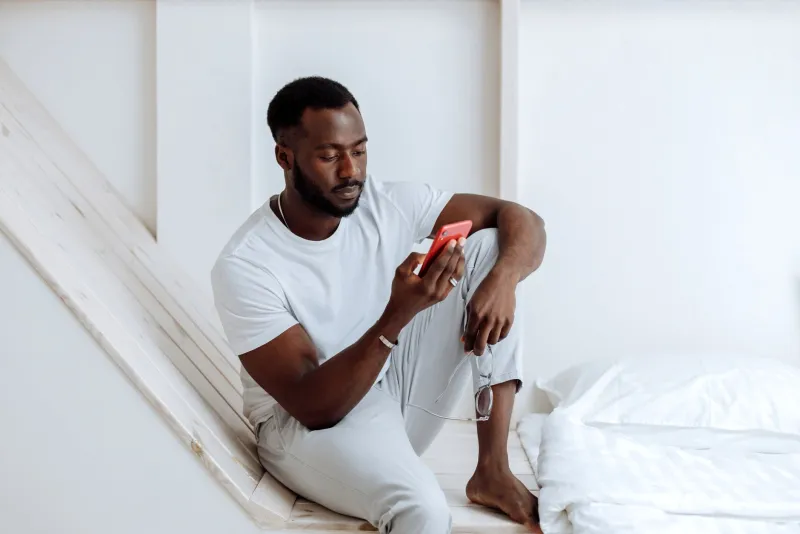
There's a particular kind of confidence that doesn't announce itself with a verified checkmark or a curated grid. It shows up in the person at the dinner party who, when asked for their Instagram handle, simply says, "I'm not on it." And somehow, that answer lands harder than any follower count ever could.
Welcome to the era of strategic refusal—where the most sophisticated thing you can do is decide what you won't participate in.
The Opt-Out Economy
For years, the cultural script was pretty straightforward: more is more. More followers, more output, more visibility, more hustle. The algorithm rewarded volume, and so did the culture around it. But something started shifting quietly, somewhere between the fifth productivity app download and the hundredth "authentic" brand partnership post.
People got tired. And then the tired people got interesting.
Across creative industries—design, music, independent fashion, food—a new kind of status symbol emerged. Not the flashy kind. The quiet kind. The kind that says, I know what this game is, and I've decided not to play it.
Naomi Reyes, a Brooklyn-based illustrator who left social media entirely in 2021, describes the shift in her own career as nothing short of transformative. "I had 40,000 followers and I was miserable," she says. "Every piece I made was filtered through this question of 'will this perform?' Once I left, I started making the weirdest, most personal work of my life. And weirdly, that's when galleries started calling."
Her story isn't unique—which is, in itself, kind of the point.
Rejection as Identity
There's a long cultural history in America of the outsider as icon. From Thoreau retreating to Walden Pond to Steve McQueen refusing to play Hollywood's game to the entire ethos of punk rock, opting out has always carried a certain mythological weight. What's different now is the scale—and the self-awareness.
This isn't accidental disengagement. It's deliberate. Curated, even, in the most irony-free sense of that word.
Marco Ellis, a menswear designer based in Detroit who built his label entirely through word-of-mouth and a deliberately bare-bones website, puts it plainly: "Fast fashion wants you constantly chasing the next thing. I make twelve pieces a year. That's it. People wait for them. That waiting is part of the value." His refusal to scale, to wholesale, to play the wholesale-to-big-retailer game hasn't shrunk his brand—it's made it a cult object.
The economics of scarcity aren't new. But the values driving this particular scarcity are. Ellis isn't limiting supply to jack up prices. He's limiting supply because he genuinely believes that making less, better, is a form of integrity. And his customers—who tend to be other creative professionals who've made similar choices in their own lives—respond to that.
The Algorithm Didn't Break Us. We Outgrew It.
It would be easy to frame all of this as a backlash. Algorithm bad, human spirit good, everyone clap. But the people actually living these opt-out lives tend to be more nuanced about it.
"I don't think social media is inherently evil," says Jade Tran, a Chicago-based photographer who recently moved her entire client communication off Instagram DMs and back to email. "I think it's a tool that a lot of us let become the whole toolbox. I still use it. I just stopped letting it use me."
That distinction—between using a platform and being used by one—is where the real cultural conversation is happening. It's less about rejection for rejection's sake and more about intentionality. About asking, with genuine curiosity, does this thing serve who I'm trying to be?
For a lot of people right now, the honest answer to that question is: not really.
And saying so out loud has started to feel less like admitting defeat and more like declaring something.
Opting Out of the Dating Script, Too
The refusal culture isn't confined to professional life. It's reshaping how people approach relationships, too.
A growing number of Americans—particularly in their late twenties and thirties—are stepping back from the app-mediated dating ecosystem, not because they've given up on connection, but because they've gotten specific about what kind of connection they want. "I deleted Hinge and told myself I'd just meet people the old-fashioned way," says Dani Okafor, a musician and music educator in Austin. "I thought it would feel like a sacrifice. It felt like relief."
Opting out of conventional dating timelines—the marriage-by-thirty script, the homeownership milestone, the kids-because-that's-next logic—is increasingly framed not as failure but as discernment. The people doing it aren't apologetic. They're specific. And specificity, it turns out, reads as confidence.
The Sophistication of Stillness
What all of these choices have in common is a kind of deliberate stillness in the middle of a culture that rewards constant motion. It takes more self-knowledge to say "this isn't for me" than to simply go along with what everyone else is doing. It requires having done the internal work of figuring out what actually matters to you—separate from what you've been told should matter.
That's not easy. And maybe that's why it reads as sophisticated.
Reyes, the illustrator who walked away from her social following, laughs when she thinks about where she is now. "People ask me how I built my career without social media, like I have some secret. The secret is I just stopped doing the thing that was making me miserable and started doing the thing that made me feel alive. That's it."
Straightforward. Radical. Entirely her own.
In a culture that's spent the last decade optimizing everything—content, calories, commutes, relationships—the truly countercultural move might just be to stop optimizing and start deciding. Not what performs best. Not what the algorithm rewards. What you actually want.
Saying no, it turns out, is its own kind of yes.